Amazon Carousel

Showing posts with label long overdue review. Show all posts

Monday, May 30, 2016

{Review} Sunbolt by Intisar Khanani

Sunbolt (The Sunbolt Chronicles, #1)Sunbolt by Intisar Khanani

My rating: 4 of 5 stars


Way too short. Luckily, today is release day for book 2, so I'm not wholly disappointed.

I bought this book last year or so after hearing about the author's ability to weave a story. And...like it so often happens, it got lost in my kindle. Notification that my pre-order went through from amazon and I said OH YEAH! And quickly started reading SUNBOLT so I could smoothly transition into Memories of Ash.

All those rumors I heard about the author's ability to weave a tale were true. Very well wrought, kept my attention, but way too short. Short as in...I wanted more time spent with Val, more time and discovery of her lost memories, more more more!

Good thing I have book 2. But if it ends anything like book 1, I'm going to be whiny. And stamping my foot. And impatiently waiting for the next one. ;)


View all my reviews

Sunday, May 31, 2015

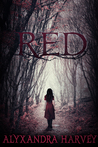
Review: Red by Alyxandra Harvey

RedRed by Alyxandra Harvey

My rating: 5 of 5 stars


This review is long overdue. With medical crises and what is now my new life, my reading had been pushed to the wayside and I finally am picking up and getting my reviews out. My profuse apologies to Entangled Teen and the author for being so late when you so graciously granted me a review copy!

With that being said, now to the review. This deserves every single gold star I can give it. Let's start with the cover. I'm not a complete cover junkie, but I have to admit that covers can lure me in. This cover is stunning in its simplicity and totally drew me in, making me want to read.

But that cover is nothing to the story inside.

Loosely, you can consider this a re-telling of Little Red Riding Hood. This is a fairy tale re-telling turned on its ear, made supernatural, and written in such a manner that you're gonna be guessing for most of the story.

I don't want to give away a single thing, so I will leave this review by saying: Ms Harvey...I hope you write more in this world. This was my introduction to your work and now I have to go add more of your books to my TBR.


View all my reviews

Sunday, September 14, 2014

{BOOK REVIEW} Call Me Grim by Elizabeth Holloway

Book Title: Call Me Grim
Author: Elizabeth Holloway
Publisher: Month9Books
Publishing Date: September 9, 2014
Length:
Source:publisher in exchange for an honest review
Book Blurb

The truck should have turned Libbi Piper into a Libbi Pancake -- and it would have, too, if Aaron hadn't shown up and saved her life. The problem? Aaron's the local Grim Reaper... and he only saved Libbi's life because he needs someone to take over his job. Now, Libbi has two days to choose between dying like she was supposed to, or living a lonely life as Death Incarnate. Talk about a rock and a hard place.

And the choice goes from hard to sucktastic when her best friend shows up marked: condemned as a future murderer. Libbi could have an extra week to stop the murder and fix the mark... but only if she accepts Aaron's job as Reaper, trapping herself in her crappy town forever, invisible and inaudible to everyone except the newly dead. But, if she refuses? Her best friend is headed straight for Hell.


 Goodreads | Amazon
 
 Disclaimer: I received a review copy from the publisher in exchange for my honest review as follows.

I was delighted to be offered a chance to read this book in exchange for a review. I've recently found a few books here and there that deal with reapers and have become more and more interested in this kind of storyline. Morbid? Perhaps. But I like that justice you see displayed and the compassion that often comes with it.

This book is no different when you're at the reaping part. Aaron displays great compassion for the recently deceased and there is fear for those who have to go to the Darkness. But the main storyline focuses around the new soon-to-be reaper and all that she discovers about the current Grim Reaper, her best friend, etc.

I think I am too old for this book and its demographic. While I enjoyed reading the novel, I tended to roll my eyes a lot especially when it came to one of her best friends and the fight ("If you don't know why I'm mad, then you're stupid!" etc.) or how Libbi's idea of fixing her best friend is to lie to him and tell him what he wants to hear or how, even after he causes her to get stitches from a display of violent temper, that violence is swept under the rug, especially when she learns about Aaron's past.  (Did you love that run-on? :D) I think I'm at the stage of my life where my tolerance for this is just absolutely gone.

I am not a fan of Kyle: I found him manipulative, I disliked his tendency towards violence (doesn't matter he didn't mean to hurt HER, he meant to hurt someone), and disliked his woe-is-me crap.

The ending could be termed a cliffhanger, but you could also read this as a standalone and fill in the "after" with your own imagination. If there's a second book for the "after", then hey! It was a cliffhanger! If not, then your imagination can take over.

Thanks to Month9Books for the read!

Tuesday, August 19, 2014

{Book Review} RANGE and THE MAGPIE BRIDGE, Books 4 and 4.5 of The Junco Series by JA Huss


You're probably wondering why I'm doing two at once today. Since THE MAGPIE BRIDGE is a novella and technically 4.5 in the series, I thought it would make sense to review it with book 4, RANGE. The way the novel is situated, it times nicely, too. So there you have it and away we go! 

Book Title: RANGE, Book 4 in the Junco Series
Author: JA Huss
Publisher: Science Future Press
Publishing Date:April 2013
Length: 400 pages
Source: Purchased

Some things can’t be undone.
If this happens,
There’s just one thing
Left to do.

Kill that bitch.

It doesn’t matter
What it takes for you
To get your chance.

You kill that bitch,
And don’t worry
About afterward.
Because it won’t matter.

Two years have passed since Inanna stole Junco away from Lucan. Two years of unimaginable pain. Two years of isolation, mutilation and torture. Two years of fear and loneliness in a morph tank. And that’s not something you just get over, even if you are psycho-assassin, Junco Coot.

Now Junco has to learn to live with the consequences. Her Siblings are suspicious and angry, half her team is dead, Tier is wreaking death and destruction, Lucan is holding his secrets close, and she is spiraling out of control.

There is only one partnership that matters anymore – only one person she will trust and take direction from – and only one way out of the Hell she’s been sentenced to.

Junco is tired of fighting and death. She’s had enough and this time she means to end it – once and for all.

 Book 1, Clutch: http://bit.ly/ClutchHuss
Book 2, Fledge: http://bit.ly/FledgeHuss
Book 3, Flight: http://bit.ly/FlightHuss
Book 4, Range : http://bit.ly/RangeHuss
Book 4.5, The MagPie Bridge: http://bit.ly/MagpieBridgeHuss
Book 5, Return: http://bit.ly/ReturnHuss

Omnibus, Books 1, 2, 3: http://bit.ly/JuncoOmnibus

 These books are akin to emotional torture for those who become attached to the characters they are reading. I'm not kidding. Junco was kidnapped at the end of book 3 and when when she wakes in this book, she's been captive for 2 freaking years. TWO YEARS. And her wings have been taken from her. And not only has she suffered incredible pain and torture for two years, but we are also exposed to all of her suppressed memories, of what makes Junco Junco. And it's heartbreaking. It really is. She is resilient and strong and on the cusp of insanity. The secrets and lies are not helping this in any manner whatsoever, and yet what choice do they have?

So you have Junco and Tier, the main characters. And really, you'll dislike Tier for most of this book. I did. But then all the secondary and tertiary characters must be considered. And considered well. They are all complex, have a story to tell, and a part to play in this incredibly twisted, gnarled, woven tapestry of Junco and her fate. We have a creation myth going on here, a prophecy, and this girl who is walking on eggshells as she balances precariously between sanity and insanity with the pressure of a fate/destiny she does not know weighing on her shoulders. She is broken, confused, vulnerable, and you aren't really sure if she is going to murder someone or suicide her way out.

The strangest thing about all of this is the amount of sympathy she brings out from you. It isn't pity, it isn't charitable, it's almost empathy as her pain and confusion is palpable, but of course it's not since I've never gone through anything like she has. You can't help but want to pull her to you, hug her, and surround her with honesty and love. But I get a strange feeling that it would break her at this point. Don't be surprised if you're left in tears. I get attached to some of the characters I read about...Junco is one of them. Full on tears, here.

I know I am raving about this series, and it highly deserves these accolades, but make no mistake: these are not easy reads. They are deliciously twisted, delicately woven, the plot complicated though it seems it should be straightforward, and will leave you feeling as if you just tore your hair out, while screaming at every single character. 


Book Title: The Magpie Bridge, Book 4.5 in the Junco Series
Author: JA Huss
Publisher: Science Future Press
Publishing Date:April 2013
Length:80 pages
Source: purchased

Sometimes what you want
Doesn’t matter,
Sometimes you just
Gotta finish what you started.
Sometimes this really
Fucking sucks.

But other times
You need to take a breath
And sit on the beach.

A long, deep, breath
To remind you of why
You signed on for this shit
In the first place.

This is my breath.

~ Tier


This novella is a gift from JA Huss. No, she didn't give it to me, I bought it. What I mean is, this is a little balm to your soul after the tumultuous, turbulent RANGE. In this novella, we're in Tier's head, seeing things from Tier's point of view. Not the whole series, but just enough to get a glimpse, a touch of clarity, about the impending final outcome. No, at this point, I still can't seem to piece it together. And I read this series in one fell swoop. I admit to missing bits and pieces that would help me pull this together a bit more.

The Magpie Bridge is a mythology story that is related to us in a moment between Junco and Tier. And here, in this novella of the same name, we the readers are being soothed by insight to Tier's heart and mind. It feels as if he's begging for not only Junco's trust, but for ours as well. And as a few more details come to light, you begrudgingly hand it over to him.

Like the four novels before it, this little novella has a helluva lot to say and pieces of a puzzle are starting to click. Unlike other series, I would highly recommend you get this novella, too, and read it in order. I am so glad I waited to read Fledge through Return until I had all of them on my kindle and time to read them together. I cannot imagine reading these piecemeal. The waiting surely would have killed me, even if they had come at the JA Huss pace I'm becoming accustomed to. 

Book 1, Clutch: http://bit.ly/ClutchHuss
Book 2, Fledge: http://bit.ly/FledgeHuss
Book 3, Flight: http://bit.ly/FlightHuss
Book 4, Range : http://bit.ly/RangeHuss
Book 4.5, The MagPie Bridge: http://bit.ly/MagpieBridgeHuss
Book 5, Return: http://bit.ly/ReturnHuss

Omnibus, Books 1, 2, 3: http://bit.ly/JuncoOmnibus

Sunday, August 10, 2014

{ARC Review} The Book of Life by Deborah Harkness, the final book in the All Souls Trilogy

Book Title: The Book of Life
Author: Deborah Harkness
Publisher: Viking Adult, Penguin
Publishing Date: July 15, 2014
Length: 564 pages
Source: Publisher via Netgalley

The highly anticipated finale to the #1 New York Times bestselling trilogy that began with A Discovery of Witches

After traveling through time in Shadow of Night, the second book in Deborah Harkness’s enchanting series, historian and witch Diana Bishop and vampire scientist Matthew Clairmont return to the present to face new crises and old enemies. At Matthew’s ancestral home at Sept-Tours, they reunite with the cast of characters from A Discovery of Witches—with one significant exception. But the real threat to their future has yet to be revealed, and when it is, the search for Ashmole 782 and its missing pages takes on even more urgency. In the trilogy’s final volume, Harkness deepens her themes of power and passion, family and caring, past deeds and their present consequences. In ancestral homes and university laboratories, using ancient knowledge and modern science, from the hills of the Auvergne to the palaces of Venice and beyond, the couple at last learn what the witches discovered so many centuries ago.

With more than one million copies sold in the United States and appearing in thirty-eight foreign editions, A Discovery of Witches and Shadow of Night have landed on all of the major bestseller lists and garnered rave reviews from countless publications. Eagerly awaited by Harkness’s legion of fans, The Book of Life brings this superbly written series to a deeply satisfying close.

Goodreads | Amazon


 This was a fantastic ending to the All Souls trilogy. The book is now available, but I was granted a galley copy courtesy of the publisher via Netgalley in exchange for my honest review. This is it.

After discovering Ashmole 782 with Diana in A DISCOVERY OF WITCHES, and then traveling back in time with Matthew to 1591 in SHADOW OF NIGHT, Matthew and Diana have returned home. Diana is now the blood-daughter of Phillipe, a powerful witch in her own right, and mated to one of the most powerful vampires.

I want to go on and on and talk about every little action of the plot, but to do so would snatch the joy from your own reading. I do my best to keep things spoiler-free. So here's my best attempt: I think you will be pleased at the action, the plot, the characters, Diana's development, Matthew's development, and the fact that there are a few characters from the past who return. There are a TON of characters in this novel and it can be a tad overwhelming at time, especially as they are so masterfully written, you will want novels of their own. (Gallowglass, I'm especially looking at you!) This is one of those rare trilogies where the ending is THE ENDING. As I closed my kindle, I sighed with satisfaction, happy with the ending, happy with the growth of power and family and friendships and camaraderie and trust.

I expected certain things to happen after Diana "loses" her weaver's threads and was not disappointed. This book was a little more violent, each action building upon the previous, until you get this giant crescendo. And after that crescendo, the notes fall back to their places in harmony. This isn't just a story of a witch and a vampire who fell in love; this is a story about humanity, family, what builds us up, what breaks us down, and to think before we act. Thoroughly enjoyed as much as the other two books and will be happy to reread this trio sometime in the future, all back to back.

Saturday, August 2, 2014

{Book Review} Mrs Poe by Lynn Cullen

Book Title: Mrs Poe
Author: Lynn Cullen
Publisher: Simon & Schuster
Publishing Date: October 2013
Length: 336 pages
Source: Netgalley

A vivid and compelling novel about a woman who becomes entangled in an affair with Edgar Allan Poe—at the same time she becomes the unwilling confidante of his much-younger wife.

It is 1845, and Frances Osgood is desperately trying to make a living as a writer in New York; not an easy task for a woman—especially one with two children and a philandering portrait painter as her husband. As Frances tries to sell her work, she finds that editors are only interested in writing similar to that of the new renegade literary sensation Edgar Allan Poe, whose poem, “The Raven” has struck a public nerve.

She meets the handsome and mysterious Poe at a literary party, and the two have an immediate connection. Poe wants Frances to meet with his wife since she claims to be an admirer of her poems, and Frances is curious to see the woman whom Edgar married.

As Frances spends more and more time with the intriguing couple, her intense attraction for Edgar brings her into dangerous territory. And Mrs. Poe, who acts like an innocent child, is actually more manipulative and threatening than she appears. As Frances and Edgar’s passionate affair escalates, Frances must decide whether she can walk away before it’s too late...

Set amidst the fascinating world of New York’s literati, this smart and sexy novel offers a unique view into the life of one of history’s most unforgettable literary figures

 MRS POE by Lynn Cullen is an interesting piece of historical fiction. While it has often been surmised that Frances Osgood and Edgar Allan Poe had an affair, many historians and lit buffs deny this and instead say that it was simply a friendship between two poets. Ms Cullen's afterward supports her theories throughout the book with articles and letters and poems. However, it is all about interpretation and that's what Ms Cullen's book MRS POE is - her take on what she's researched and read.

I've loved Edgar Allan Poe and his macabre stories since Advanced Literature classes in middle school. When we had to choose a piece to perform for our class, I chose "The Black Cat'. When we had to choose a poem to recite, I chose 'Annabel Lee'. So of course I jumped at the chance to request this from Netgalley!

I do enjoy stories like this that are set at the time of the author's life. I had no idea that Edgar Allan Poe was considered such a delicious man in the literary circles of New York. These upper echelons visit "slums" for fun, to pick up new slang, to see how the other half lives, to appreciate their own wealth and to convince themselves that handing out a few coins was charity. The society in which Edgar Allan Poe as well as his contemporaries tried to garner support were really not so wonderful. And here we have the story of Frances Osgood, mostly left in obscurity except for her 'Puss in Boots' translation/adaptation and for these poems between her and Poe. Lynn Cullen spins this story of how these two were ardent lovers, both unhappily married, whose paths crossed frequently a few years before their respective deaths.

I liked the story. But I found Frances (Fanny) annoying. Here is this woman whose husband has ditched her and their two children. She has had a successful writing career writing children's poems and books and yet she is constantly whining about writing something 'meaningful.' Poe's The Raven has taken off like a shot, people quoting "Nevermore!" often, drawn to the dark side of the poem. Fanny wants this kind of fame, but most importantly, money to feed her children and hopefully get out of her friend's house. She whines and complains in her inner monologue and I found it rather infuriating. You KNOW how to write children's books and are well-received in that arena. Continue to write those to feed yourself and worry about your "muse inspired" poems that you want to write on the side. I found this ridiculous and annoying. Trust me, I understand that in her world, women are still subjected to men's rule. But there are women in her society whom she is acquainted with who are independent and "somebodies" of their own accord, whether it was through writing and critiquing to being an early proponent of abortion. Ridiculous. Even Poe says at one point in this book that he sold something to pander to the masses because IT PAID.

It's hard to comment on some items as my copy is an e-galley from before publication, but I do hope that in the final copies, they changed how the poems were presented and the line breaks. I did not like how they were paragraphed instead of line by line, which I think makes a cleaner presentation. Again...my copy was a reader's early copy which is not final structure, etc.

Most of this book seems to be obsessed with the dichotomy of rich versus poor. Fanny is from a rich family who has been disowned because she married a poor painter. That poor painter, Samuel Osgood, is constantly philandering to the rich women he paints, greedy for gold and sex and leaving his wife and children to languish and pine for his attention. I snorted when Fanny is ridiculing her former residence, a very expensive hotel, with a statement that "all this opulence is suffocating." Right. I'm sure you prefer starving with your children on the charity of a friend and her husband.

As the story progresses, Mrs Poe is painted as maniacal, often saying inappropriate things much like a young girl would but also showing a vindictive, vicious side towards Fanny whom she suspects her husband has fallen in love with. When the end comes, we realize that perhaps Virginia was innocent after all, and it was Fanny's guilt that made Virginia seem vicious towards her. It was an interesting twist and not one I expected.

All in all, this was an enjoyable book and one that I'm glad I read. It stirred up a desire to re-read Poe's stories and poems, which I haven't done in years, and to do my own little researches to reading more about Frances Osgood and Edgar Poe and to see how their paths crossed. Is Ms Cullen correct in her theory that they were lovers and that one of Frances' children was in fact Mr Poe's? Who knows? But the forbidden romance of two poetic souls straining towards one another while trapped in society's ropes and their own loveless marriages was quite emotional. 

Goodreads | Amazon


Mrs. Poe
One

When given bad news, most women of my station can afford to slump onto their divans, their china cups slipping from their fingers to the carpet, their hair falling prettily from its pins, their fourteen starched petticoats compacting with a plush crunch. I am not one of them. As a lady whose husband is so busy painting portraits of wealthy patrons—most of whom happen to be women—that he forgets that he has a family, I have more in common with the girls who troll the muddy streets of Corlear’s Hook, looking to part sailors from their dollars, than I do with the ladies of my class, in spite of my appearance.

This thought bolted into my mind like a horse stung by a wasp that afternoon at the office of The Evening Mirror. I was in the midst of listening to a joke about two backward Hoosiers being told by the editor Mr. George Pope Morris. I knew that the news Mr. Morris was obviously putting off giving me must not be good. Still, I laughed delightedly at his infantile joke, even while choking on the miasma created by his excess of perfumed hair pomade, the open glue pot sitting upon his desk, and the parrot cage to my left, which was in dire need of changing. I hoped to soften him, just as a “Hooker” softens potential customers by lifting a corner of her skirt.

I struck when Mr. Morris was still chuckling from his own joke. Showing teeth brushed with particular care before I had set off to confront him after a silence of twenty-two days, I said, “About the poem I sent you in January. . . .” I trailed off, widening my eyes with hopefulness, my equivalent of petticoat lifting. If I was to become independent, I needed the income.

No sailor considering a pair of ankles looked more wary than Mr. George Pope Morris did at that moment, although few sailors managed to achieve the success he had at toilet, particularly with his hair. Never before had such a lofty loaf of curls arisen from a human head without the aid of padding. It was as if he had used his top hat for a mold. Whether by design or accident, one large curl had escaped the mass and now dangled upon his forehead like a gelatinous fishhook.

“Might you have misplaced it?” I asked lightly. Maybe he would appreciate putting the blame on his partner. “Or perhaps Mr. Willis has it.”

His gaze slid down to my bosom, registered the disappointment of seeing only cloak, then snapped back to my face. “I’m sorry, Mrs. Osgood. To be quite frank, it is not what we are looking for.”

“I’m certain that your female readership would enjoy my allusions to love in my descriptions of flowers. Mr. Rufus Griswold has been so kind to include some of my poems in his recent collection. Perhaps you’ve heard of it?”

“I know Griswold’s collection. Everyone does—he’s made sure of it. How that little bully got to be such an authority on poetry, I’ll never know.”

“Threats of death?”

Mr. Morris laughed, then waggled his finger at me. “Mrs. Osgood!”

Quickly before I lost him: “My own book, published by Mr. Harper, The Poetry of Flowers and the Flowers of Poetry, sold quite well.”

“When was that?” he asked distractedly.

“Two years ago.” Actually it was four.

“As I thought. Flowers are not what is selling of late. What everyone is interested in these days are shivery tales. Stories of the macabre.”

“Like Mr. Poe’s bird poem?”

He nodded, causing the great greased curl to bounce. “As a matter of fact, yes. Our sales soared when we brought out the ‘The Raven’ at the end of January. Same thing happened when we reprinted it last week. I suspect we could reprint it ten times and it wouldn’t be enough. Readers have gone Raven-mad.”

“I see.” I didn’t see. Yes, I had read the poem. Everyone in New York had since it had first been published the previous month. Even the German man who sold newspapers in the Village knew of it. Just this morning, when I asked him if he had the current issue of the Mirror, he’d said with an accent and a grin, “Nefermore.”

My dearest friend, Mrs. John Russell Bartlett, part of the inner circle of the New York literati, thanks to her husband, a bookseller and publisher of a small press, would not be quiet about him. She had been angling to meet him ever since “The Raven” had come out. In truth, I had thought I might get a glimpse of the wondrous Mr. Poe in the office that morning. He was an editor at the Mirror as well as a contributor.

Mr. Morris seemed to read my mind. “Evidently, our dear Mr. Poe is feeling his success. He is threatening to leave the magazine. Wherever he goes, I wish them luck in dealing with his moods.”

“Is he so very moody?” I still hoped to cajole Mr. Morris into friendship and, therefore, into indebtedness.

Mr. Morris gestured as if tipping a glass to his mouth.

“Oh.” I made a conspiratorial grimace.

“He’s really quite unbalanced, you know. I suspect he’s more than half mad, and it’s not just the drink.”

“A shame.”

He smiled. “Look, Mrs. Osgood, you are an intelligent woman. You’ve had some luck with your story collections for children. My own little ones loved ‘Puss in Boots.’ Why don’t you go back to that?”

I could not tell him the real reason: money. Writing children’s stories did not pay.

“I feel that it’s important for me to expand my writing,” I said. “I have things I would like to say.” Which was also true. Why must a woman be confined to writing children’s tales?

He chuckled. “Like which color brings out the roses in one’s complexion, or how to decorate at Christmas?”

I laughed, good Hooker that I am. Still smiling, I said, “I think you might be surprised at what I am capable of.”

His parrot squawked. He fed it a cracker from his pocket, then wiped his hands on his pantaloons, his sights making their habitual rounds from my eyes to my bust and back again. I forced myself to keep a cheerful gaze, although I wished to slap the curl off his forehead.

He frowned. “A beautiful woman like you shouldn’t have to trouble your head with this sort of thing, but what if you came up with something as fresh and exciting as ‘The Raven,’ only from a lady’s point of view?”

“Do you mean something dark?”

“Yes,” he said, warming to the idea. “Yes. Exactly so—dark. Very dark. I think there might be a market for that. Shivery tales for ladies.”

“You’d like me to be a sort of Mrs. Poe?”

“Ha! Yes. That’s the ticket.”

“Will I be paid the same as Mr. Poe?” I asked brazenly. Desperate times call for uncouth measures.

He marked the inappropriateness of my question with a pause before answering. “I paid Poe nothing, since he was on staff. I should think you’d want to do better than that.”

Although already envious of Mr. Poe for his recent success, I felt a twinge of sympathy for the man. Perhaps he was independently wealthy, as was Mr. Longfellow or Mr. Bryant, and did not need the money or my compassion. In any case, he was not wed to a philandering portrait painter.

Mr. Morris led me to the door. “The Mirror is a popular magazine, Mrs. Osgood. We’re not interested in literature for scholars. Bring me something fresh and entertaining. Something dark that will make the lady readers afraid to snuff their candles at night. You do that, and I’ll see what I can do for you. Just don’t turn your back on us when you’ve reached the top, as did our Mr. Poe.”

“I wouldn’t. I promise.”

“Poe’s his own worst enemy—he no sooner makes a friend than he turns him into a foe.”

“I wonder what has made him such a difficult character.”

He shrugged. “Why do wolves bite? They just do.” He held open the door, letting in a cool draft. “Give my regards to Mr. Osgood.”

“Thank you,” I said. “I will.” If he ever tired of his current heiress and came home.

•  •  •

I soon found myself on the sidewalk of Nassau Street and, it being a mild day for February, ankle-deep in slush. Gentlemen passed, encased in buttoned overcoats and plugged with top hats. They flicked curious gazes in my direction, not sure whether I was a lady to whom they should tip their hat or a Hooker who had wandered into their inner sanctum. Few females of any sort ventured into the hallowed business precincts of New York—the engine room of what was becoming the greatest money factory in the world.

I bent into the biting wind, ever present in winter in this island city, and rounded the corner onto Ann Street. A landau clattered by, its wheels flinging melted snow. Across the way, a hog rooted in refuse, one of the thousands of pigs who plied the streets, be it rich district or poor. The wet had brought out the smell of the smoke rising from the forest of rooftop chimneys as well as the stink of horse manure, rotting garbage, and urine. It is said that sailors can smell New York City six miles out at sea. I had no doubt of it.

Two short blocks later, across Ann Street from Barnum’s American Museum, with its banners advertising such humbuggery in residence as President Washington’s childhood nurse and the Feejee Mermaid, I arrived upon the shoveled promenade of Broadway. Vehicles poured down the thoroughfare before me as if a vein in the city had been opened and it was bleeding conveyances down the bumpy cobblestones. The din they made was deafening. The massive hooves of shaggy draft horses clashed against the street as they pulled rumbling wagons bulging with barrels. Stately carriages creaked by behind clopping bays. Hackneys for hire rattled alongside omnibuses with windows filled with staring faces. Whips cracked; drivers shouted; dogs barked. In the midst of it all, on a balcony on the Barnum’s building, a brass band tootled. It was enough to test one’s sanity.

Clutching my skirts, I hurried through a gap in the thundering traffic. I landed breathless on the other side of the street, where the Astor House hotel, six stories of solid granite gentility, sat frowning down its noble pillars at me. It seemed aware that I had only two pennies in the expensive reticule on my arm.

Just a month previously I had been one of its pampered residents. I had been among the privileged to bathe in its hot-running-water baths. I, too, had enjoyed reading by the gaslights and dining with the rich and beautiful at the table d’hôte. Samuel had insisted that we take rooms at the Astor House when we had moved to New York from London, to make a good impression.

Had I known of the ruinous state of our ledgers, I would have never agreed to it. But Samuel thought that as the daughter of a wealthy Boston merchant, I expected no less of him. He could never get over the inequality of our backgrounds, no matter how much I assured him that it didn’t matter to me. I, on the other hand, had gotten over it the moment he first kissed me. I had no care if we took up housekeeping in a soddy, as long as I spent the night in Samuel Osgood’s arms. Samuel, though, could never quite believe this. There is no more prideful creature than a man born poor.

Now, hunched against the icy wind and feeling the pinch of my thin pointed boots and the stabbing of my corset stays, I marched up the assault on the senses that is called Broadway. The loud swirl of striving people and their beasts dazzled the eyes, as did the brightly painted establishments bristling with signs that bragged LIFE-LIKE DAGUERREOTYPES! WORLD’S FRESHEST OYSTERS! MOUTH-WATERING ICE CREAM! FINEST QUALITY LADIES’ FANS! The stench of rotting sea creatures commingled with the sweet scent of perfumes, as did the spicy odor of unwashed human flesh and the aroma of baking pies.

Soon the flapping awnings of tobacconists, haberdashers, and dry-goods emporiums gave way to mansions with ornate iron fences that fringed their foundations like chin whiskers. Although the richest man of them all, Mr. Astor, refused to budge from his stone pile at Broadway and Prince, the fashion was to show off one’s newly minted money by constructing a castle in the neighborhoods north of Houston Street. It was in this vaunted district that I turned westward on Bleecker. In boots made to stroll across a manicured square, not march up a mile and a half of flagstones, I minced painfully past ranks of stately brick houses at LeRoy Place, in many of which I’d had tea. Near the writer James Fenimore Cooper’s ostentatiously large former home on Carroll Place, about which his wife liked to complain often and loudly that it was “too magnificent for our simple French tastes,” I veered right onto Laurens Street.

With an end in sight, I picked up my pace as much as my cursed corset and destroyed feet would allow. I hobbled elegantly by a tumbledown row of stables, smithies, and small wooden dwellings meant for those who served the denizens of the palaces around them, until at last, a block short of Washington Square, I came to Amity Place, yet another enclave of new four-story Greek Revival town houses caged in by black ironwork fences. From a third-story window, through an oval that had been cleared in the frost by the sun, peered two young girls.

My heart warmed. I opened the wrought iron gate, climbed the steep flight of six stone steps, and pushed open the door.

Five-and-half-year-old Vinnie was running down the narrow staircase as I entered the hall. “Mamma, did he buy your poem?”

“Hold on to the railing!” I exclaimed. Behind her, my elder daughter, Ellen, three years older than her sister and worlds more cautious, took the stairs at a more judicious rate.

Vinnie threw herself against me. A loud crash descended from an upstairs room, followed by a wail and the exasperated voice of my friend Eliza.

Ellen made a safe landing and held out her arms to take my mantle and hat. “Henry is being bad.”

I glanced above her. “Yes, I can hear him.”

“Mamma,” Vinnie demanded, “did the man buy your poem?”

“He didn’t buy that one. But he did ask to see more.” I opened my gloved palm, upon which lay two peppermint drops. I had taken them from a dish on Mr. Morris’s desk when I had waited for him to arrive.

Vinnie’s grin revealed a newly naked arch in her upper gums. She popped in the candy.

Ellen shifted my things in her arms, then took her piece. Not yet seven and she was as somber as a Temperance lady on Christmas. “You should write more stories for children,” she said as I peeled off my gloves. “They always buy your children’s stories.”

“I’m trying to spread my wings. What do I say about birds who don’t spread their wings?”

The candy rattled against Vinnie’s remaining teeth as she moved it to her cheek to speak. “They never learn to fly.”

“You don’t need to fly, Mother,” Ellen said. “You need to make money.”

How did she know these things? At her age, I was dressing paper dolls. Blast you, Samuel Osgood, for stunting her with worry and spoiling her childhood. I could spin all manner of tales about his care and concern for us and she always saw right through them.

“What I need to do now is to help Mrs. Bartlett,” I said cheerfully. “Vinnie, how is your ear?”

She gingerly touched the ear with the tuft of cotton sprouting from it. “Hurts.”

Just then, a young boy in a rumpled tunic trampled down the stairs, followed closely by a plain but kindly looking gentlewoman of my age, who was in turn followed by a pretty red-cheeked Irish maid carrying a toddler.

“Fanny!” cried Eliza. “Thank goodness you’re back. I have news!”

Although I had lived with Eliza Bartlett and her family for several months, my heart still swelled with gratitude at the sight of her. She and her husband had taken me in when the Astor House had turned me out. It seemed that prior to decamping for lusher pastures in November, Samuel had not paid the bill for the previous three months. After I showed up on Eliza’s doorstep with my shameful story, she made no verbal judgment, just said, “You’re staying with us.” Nor did she speak up when our other friends inquired about Samuel, but silently sat back and let me lie about his imminent return. She thus saved me from the pity that our circle would have rained upon me for being the abandoned wife of a ne’er-do-well. I would have gained their sympathy but lost my place and my pride.

She took little Johnny from her maid. “Mary, please take Mrs. Osgood’s things downstairs to dry and Henry along with you. Henry: be good.” To me she exclaimed, “Goodness, you look frozen. Why didn’t you take a hackney home?”

“What is this news?”

She removed little Johnny’s hand from inside her blouse. “Mr. Poe is coming!”

“Here?”

She laughed. “No. Not unless he wishes to change a diaper. He’s going to appear at the home of a young woman named Anne Lynch—this Saturday! And we, my dear, are invited.”

I found my excitement to meet the renowned writer was tempered by the fact that I had just been encouraged to be his competitor. “Wonderful! Do we know this Miss Lynch?”

Eliza gave little Johnny to Vinnie, who’d been silently begging for him with open arms. “She’s new to this city from Providence—she’s a friend of Russell’s family. She stopped in his shop and told him she was attempting to start a salon—not just for the usual bon ton but for artists of all kinds, rich or poor. I daresay she might have a chance at success after having snagged Poe.”

“I wonder how she lured him in.”

“She might come to regret it. He’s sure to be horribly ruthless. Poe doesn’t like anything.”

It was true. I had seen his reviews in The Evening Mirror. Prior to “The Raven,” he was best known in literary circles for his poisoned pen. For good reason he was called the Tomahawker, happy as he was to chop up his fellow writers. He regularly tore in to gentle, gentlemanly Mr. Longfellow with a savagery that made no sense. In truth, I had wondered about his sanity even before Mr. Morris’s accusation, or at least his motives for such abuse.

“The gathering is to be at seven. Say that you’ll come with me. I told her about you—” She saw my wince. “That you are a poet.”

Bless you, Eliza. “I’ll go, if the girls are well by then.”

Vinnie jogged little Johnny on her hip. “I will be!”

“There you have it,” I said with a nonchalance that I did not feel. If I became his competition, I, too, might soon be on the wrong side of the dangerous Mr. Poe. 


Friday, May 30, 2014

{Book Review} Please Don't Tell My Parents I'm a Supervillain by Richard Roberts

Book Title: Please Don't Tell My Parents I'm a Supervillain
Author: Richard Roberts
Publisher: Curiosity Quills Press
Publishing Date: February 15, 2014
Length: 376 pages
Source: Courtesy Copy for Review Purposes from publisher

Penelope Akk wants to be a superhero. She's got superhero parents. She's got the ultimate mad science power, filling her life with crazy gadgets even she doesn't understand. She has two super powered best friends. In middle school, the line between good and evil looks clear.

In real life, nothing is that clear. All it takes is one hero's sidekick picking a fight, and Penny and her friends are labeled supervillains. In the process, Penny learns a hard lesson about villainy: She's good at it.

Criminal masterminds, heroes in power armor, bottles of dragon blood, alien war drones, shape shifters and ghosts, no matter what the super powered world throws at her, Penny and her friends come out on top. They have to. If she can keep winning, maybe she can clear her name before her mom and dad find out
 I finished this book a couple of weeks ago and wrote my review and...forgot to post it. So I'm posting it now!

This was a delightful read for me as an adult and one I would have enjoyed as a middle schooler! In a world where super heroes and super villains are abundant, Penelope Akk is the daughter of two superheroes and just waiting for the day her super powers show up. She and her friends are eager to get through middle school without dealing with the "meanies" and when her powers show up, she discovers she's a scientist! She is a mad scientist who spaces out while creating her super gadgets and needs to learn to control it. From The Machine she creates that does amazing things to the super power serum she develops for her friend, Penny is on her way to becoming a...supervillain? Eek!

I really loved this book and wouldn't hesitate to recommend it to anyone who likes a fast-paced, action-packed fantasy filled with super heroes and super villains, who are truly goodhearted and not nearly as evil as you would expect!

Definitely re-readable and one I'd like on my shelves for future possible kids, nieces, nephews, etc. I'd recommend to any parent with young middle schoolers to adults who just want a fun story to escape within!


Monday, December 23, 2013

{Book Review} WITCH FIRE by Laura Powell

Witch Fire
by Laura Powell
Publisher: Bloomsbury
Source: Publisher via Netgalley

Lucas and Glory are hard at work in WICA (Witchkind Intelligence and Covert Affairs). As part of their training, they learn more about the witch-terrorist organization Endor. It is believed that Endor has infiltrated a boarding school for young witches in Switzerland, so WICA sends their two youngest agents—Lucas and Glory—to the school undercover. There, they learn more about an experimental brain implant that blocks the power of the fae. It’s a dangerous procedure . . . more so than they could ever have imagined


What if the witches of the 1600s persecutions were real and they had proliferated and became part of our society? That is what this novel's premise is based on. And this proliferation isn't just in the United States near Salem, but all over the world. Although it is accepted that there are witches in the world, registration is demanded and required by government. Some protest against this bias and go rogue to fight back. Some in protest resort to minor but strong and well-formed criminal groups. When these criminal witches are caught and prosecuted, their punishment, at the worst, is to be burned alive. Although "numbed" from the pain, they are conscious and aware of their flesh burning. *shudders*

Glory and Lucas, both born witches, have joined WICA. Sent undercover to the school in Switzerland, Glory learns the truth about her mom's involvement in what they had said she did, and her disappearance after the accusations. Glory's only memories of her mom consist of an old photograph of her mother and a short note she left to her husband, Glory's father, Patrick, that said it is better if she is gone and that she is sorry. That was all Glory knew about her mom until the moment of discovery at this school for the well-to-do families with witch children. The kids are sent to this school to be hidden away from the public at large, really. Since Lucas's conversion, his father, one of the heads of the Inquisition Office, had to resign from his post and yet still is involved, although from a more subtle position/post. He's still powerful though. He's not a bad man though; he just strongly believes in the law and justice. Events lead these two to Cordova in South America and that's where everything comes to light. Mysteries answered, unknowns made known, and both the good and the bad revealed.

It was an enjoyable alternate history story to what happened in American culture before the USA was the USA we now know. It incorporates some of the ugliest events of our past as well as events into the present day and gives the reader a different and interesting take on the witch hunting. Well envisioned, I enjoy this tale and could see parallels and correlations to politics and prejudices of our society to here.